The first time I heard about Odysseus, I wasn't watching a Christopher Nolan movie.
I was in my cousin's house, many years ago, when I was still in secondary school. They had this small collection of books — not exactly a library, but enough books to make a curious kid start digging.
Somehow, I found a book about the Trojan War.
I started reading it, and that was basically the beginning of my problem.
I became obsessed with Greek mythology.
I wanted to know who Zeus was. Then Poseidon. Then Athena. Then Achilles. Then Hercules. Then Medusa. Then every other person who had a ridiculous story and somehow ended up fighting a god, a monster, or both.
And the more I read, the more I realised Greek mythology wasn't just a collection of old stories about people throwing spears at each other.
These stories were full of jealousy, love, revenge, ambition, betrayal, pride and some very questionable decision-making.
Then, 2026, this year, I watched Christopher Nolan's The Odyssey.
And suddenly, I was that secondary-school kid again.
Except this time, I wasn't reading about Odysseus from a book. I was watching his story unfold on a massive screen.
And honestly, Odysseus was one of the smartest people in the room.
That was also his problem.
Odysseus was the king of Ithaca and one of the most famous Greek heroes of the Trojan War. But unlike someone like Achilles, whose reputation was built heavily around strength and fighting, Odysseus was known for something else.
His brain.
He was the guy you called when brute force wasn't going to work.
And that became very obvious during the Trojan War.
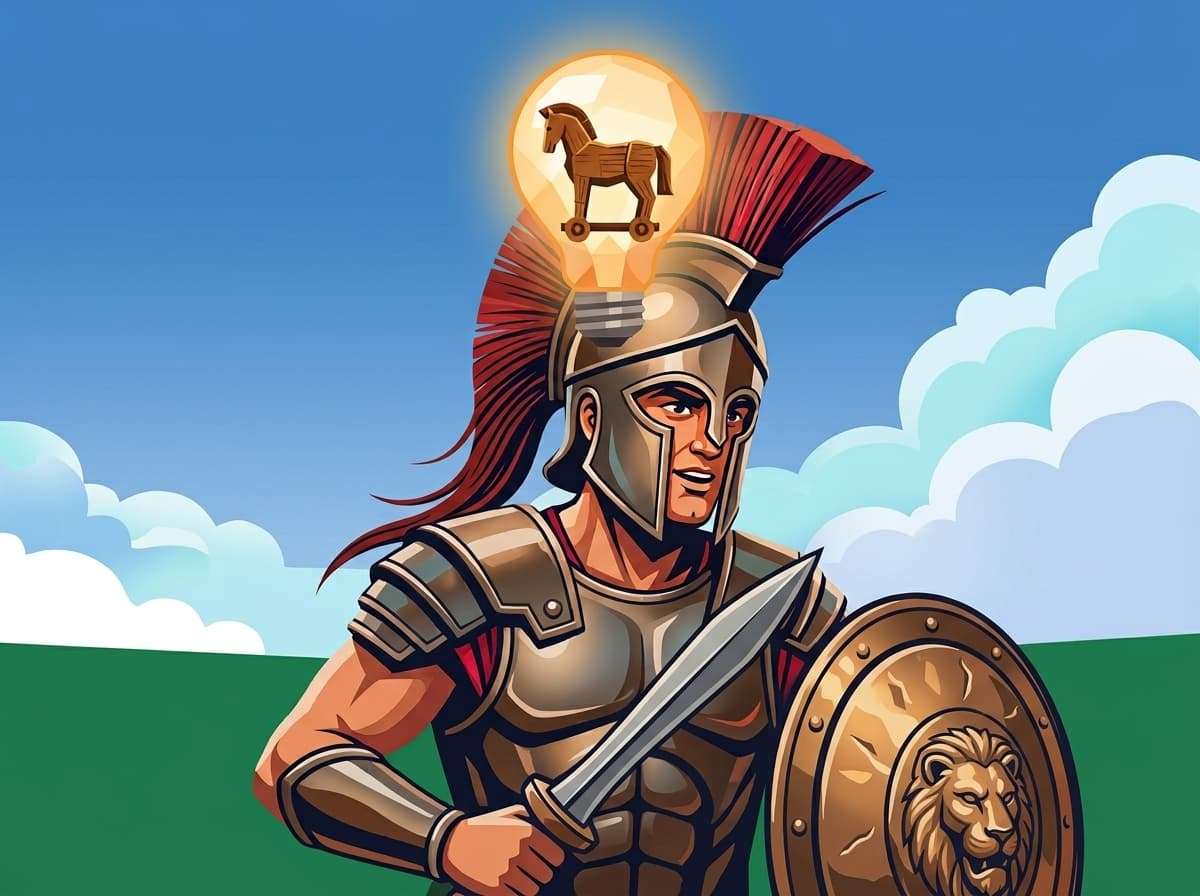
After years of fighting, the Greeks needed a way to get into Troy. So Odysseus came up with one of the most famous tricks in mythology: the Trojan Horse.
Instead of trying to smash their way through the city's walls, the Greeks built a huge wooden horse, hid soldiers inside it and made it look like they had finally given up.
The Trojans took the horse into their city.
That night, the soldiers came out, opened the gates, and the Greeks entered.
Imagine being so smart that instead of fighting your enemy, you convince them to bring you inside their kingdom themselves.
That's Odysseus.
And after Troy finally fell, he was supposed to go home.
Simple enough, right?
Well...
Not exactly.
His journey back to Ithaca became another ten years of his life.
And this is where The Odyssey becomes less of a story about a smart king and more of a story about what happens when a smart person keeps making very human mistakes.
One of the biggest ones happened when Odysseus and his men entered the cave of Polyphemus, a Cyclops.
If you've forgotten, a Cyclops is basically a giant with one eye.
Polyphemus trapped them inside his cave and started killing his men.
So, naturally, Odysseus did what Odysseus does.
He thought.
He came up with a plan, got Polyphemus drunk, told him that his name was “Nobody,” and eventually blinded the Cyclops.
The plan worked.
When Polyphemus screamed for help, the other Cyclopes asked who was attacking him.
“Nobody,” he said.
And they basically left him there.
Honestly, brilliant.
Odysseus and his remaining men escaped.
They were finally sailing away.
They were safe.
They had survived.
And then Odysseus did something that would cost him dearly.
He shouted back at the Cyclops.
He wanted Polyphemus to know who had defeated him.
“My name is Odysseus.”
Why?
Pride.
He had already won.
There was nothing left to prove.
But he wanted credit for the victory.
And Polyphemus happened to be the son of Poseidon, the god of the sea.
So Polyphemus called on his father to punish Odysseus.
And Poseidon listened.
From that point, getting home stopped being a journey and became a punishment.
The man who had used his intelligence to end a ten-year war was now spending years trying to survive his journey home.
And the things he encountered along the way were completely insane.
His men reached an island where the Laestrygonians — giant, cannibalistic people — attacked them and destroyed most of their ships.
They encountered Circe, a powerful sorceress who turned some of his men into pigs.
They had to travel into the land of the dead to seek answers about the road ahead.
They encountered the Sirens, creatures whose beautiful singing was so dangerous that sailors who heard them were drawn toward their deaths. Odysseus wanted to hear the song himself, so he had his men plug their ears while they tied him to the mast of the ship.
Then there was Scylla.
Then Charybdis.
Then the sacred cattle of the Sun God.
His men were starving. Odysseus had warned them not to touch the cattle, but eventually they killed them anyway.
And the punishment that followed destroyed their ship.
One by one, the people who had started the journey with Odysseus disappeared.
Until eventually, he was the only one left.
Think about that for a second.
This man started the journey as a king with an army.
He had ships.
He had men.
He had intelligence.
He had experience.
He had survived the Trojan War.
And after years of storms, monsters, gods, temptation and terrible decisions, he was alone.
Eventually, he ended up on the island of Calypso.
And this is one of the parts of Nolan's movie that I found especially interesting.
Calypso gives Odysseus lotus flowers that dull his memories.
The more he forgets, the less painful the past becomes.
The war.
His men.
His journey.
His home.
Even Penelope ....his wife and his son begin to fade from his mind.
And suddenly, the smartest man in the story isn't fighting a monster anymore.
He's fighting the possibility of forgetting who he is.
And that's where I started thinking about what this whole story was actually saying.
Because Odysseus wasn't stupid.
Far from it.
He was probably the smartest person in most rooms he entered.
But being smart didn't save him from himself.
This is probably the biggest thing I took from Odysseus.
His intelligence got him out of situations that would have killed most people.
But his pride put him back into trouble.
He had already escaped the Cyclops. He didn't need to announce his name. He didn't need Polyphemus to know who had defeated him.
But he wanted the recognition.
And that one decision changed everything.
That's the scary thing about pride.
It doesn't always look like arrogance.
Sometimes it looks like, “Let me just prove that I was right.”
Sometimes it looks like wanting the last word.
Sometimes it is refusing to walk away because you want someone else to know that you won.
And sometimes, like Odysseus, you can be completely right and still make a terrible decision because you want credit for being right.
Being smart is useful.
Knowing when your ego needs to shut up is even more useful.
Odysseus was curious, clever and constantly looking for ways around problems.
But sometimes, he pushed things too far.
He wanted to see the Cyclops.
He wanted to hear the Sirens.
He wanted to know things.
And curiosity is a beautiful thing until you forget that curiosity also has consequences.
There are some doors you can open simply because you can.
That doesn't mean you should.
I think that's something we all learn eventually.
Being capable of doing something doesn't automatically make it a good idea.
You can win an argument and still damage the relationship.
You can prove a point and still lose something more important.
You can be the smartest person in the room and still walk straight into a problem because you were too confident that you could handle it.
Sometimes wisdom is not knowing what to do.
Sometimes wisdom is knowing what not to do.
This might actually be my favourite part of Odysseus's story.
Because sometimes we talk about intelligent people as if intelligence should make them immune to mistakes.
It doesn't.
Odysseus was clever.
He was strategic.
He was brave.
He was a king.
And he still made stupid decisions.
He still lost people.
He still got tempted.
He still let his pride speak louder than his common sense.
He still suffered the consequences.
And maybe that's why his story has survived for thousands of years.
Because underneath all the monsters and gods, he's still just a human being trying to get home.
A very complicated human being, yes.
But a human being.
And maybe that's the part I recognised when I watched the movie.
Years ago, I was reading these stories because they were exciting.
Now, I'm old enough to watch the same story and realise that the monsters aren't always the most interesting part.
Sometimes, the real problem is the person standing in front of them.
And sometimes that person is you.
Which is probably why being smart can be dangerous for you.
About the author
Oluwa_techie🚀
Critical overthinker. I turn random thoughts, life experiences, movies, and pop culture into stories that might make you laugh, question yourself, or send them to a friend. Either way, welcome to my corner.
Korner effect
We no expect you to dey come here everyday dey refresh the page — only Kappy get that kind time. Tell us how to reach you — email, phone notification, or both — and we go find you whenever we drop a new stori.
or
No time to dey check mail? Click Notify me and we go ping you directly on your device whenever we drop a new stori — no inbox, no wahala. iPhone users, you go need to add this site to your home screen first: open in Safari, tap the share icon, select “Add to Home Screen”, then come back and click the button.